Preikestolen
58.9867, 6.1875
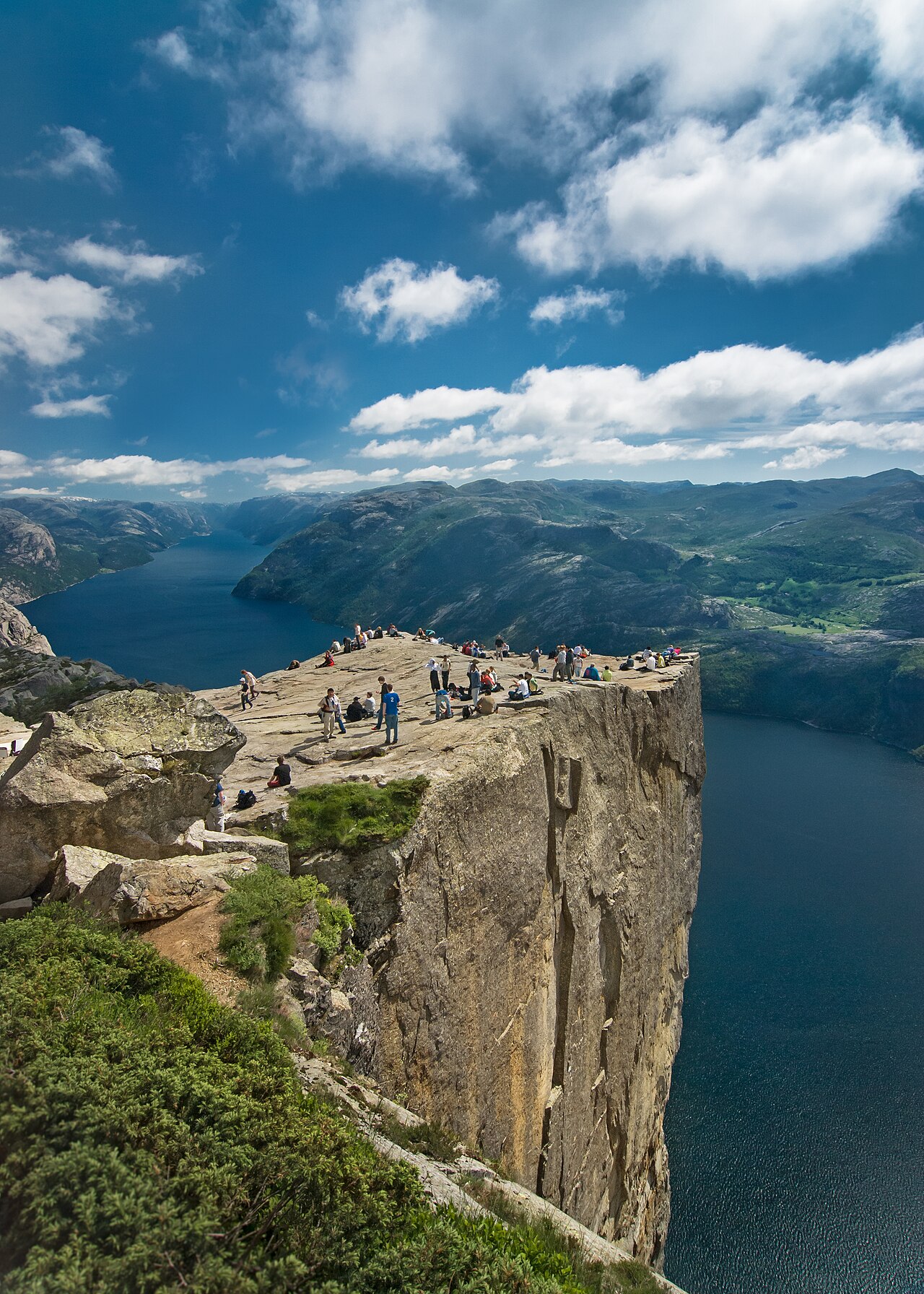
A granite cliff rising 604 metres above Lysefjorden in Rogaland, Norway. Its flat top is roughly twenty-five metres square, open and unfenced. The old local name was Hyvlatonnå, meaning the plane's tooth. The modern name was coined around 1900 by the Stavanger Turistforening to promote the site; the extra i was added later to match Nynorsk spelling. Geologists say the angular plateau was carved during the last ice age, when water froze in cracks and broke off large blocks. A deep fracture still runs along the top, though investigations suggest it will not collapse in the foreseeable future. In 2024 roughly three hundred thousand people visited.
Sources
Add a stone
—